
Blog / Hyundai Kona

Comparing Trim Models of the 2023 Hyundai Kona

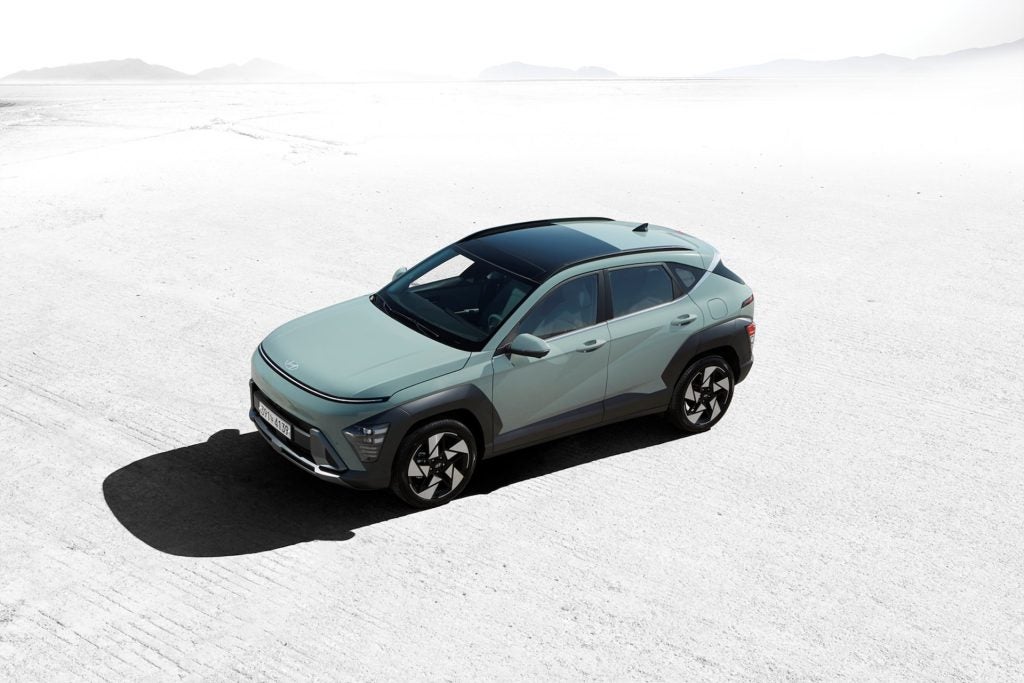
The Hyundai Kona on a white sandy road looking at it from above

The 2023 Hyundai Kona stands out in its class of small SUVs, as it delivers a powerful driving performance and an impressive range of styles and features. While many small SUVs have ordinary car engines, the Kona's has enough energy to make you feel like you're driving something sporty and exciting. The affordable price may surprise you, as this SUV offers excellent features.

With four trim levels to choose from, you might be wondering which is the best option for you. Our Dublin Hyundai team in California has reviewed the different features available to help you determine which ones you would like to have in your next car. 

Standard Across All Trim Levels

The 2023 Hyundai Kona has an impressive set of standard features that drivers of all trim levels can enjoy. For starters, all trim levels come with front-wheel drive as well as an all-wheel drive option if you want added control. Drive mode select is also available, allowing drivers to choose between Normal, Eco, or Sport mode depending on their situation. Idle Stop & Go is also available to help save on gas when the vehicle is at a standstill. 

Certain lighting features are also found in all trim levels, such as LED daytime running lights, roof-mounted center high-mount stop lights, and automatic headlights.

In the interior of the vehicle, drivers will find a 12V outlet and dual USB ports in the front and an additional one in the rear. Bluetooth hands-free technology with wireless audio streaming is standard, as is the rear camera that provides you with extra guidance when you're parking and backing up.

Below is an impressive list of the Kona's driver-assistance features that help keep its occupants safe when on the road:

  • Blind-spot collision-avoidance assist.
  • Rear cross-traffic collision-avoidance assist.
  • Lane following assist.
  • Lane-keep assist.
  • Driver attention warning.
  • Safe exit warning.
  • Rear occupant alert.
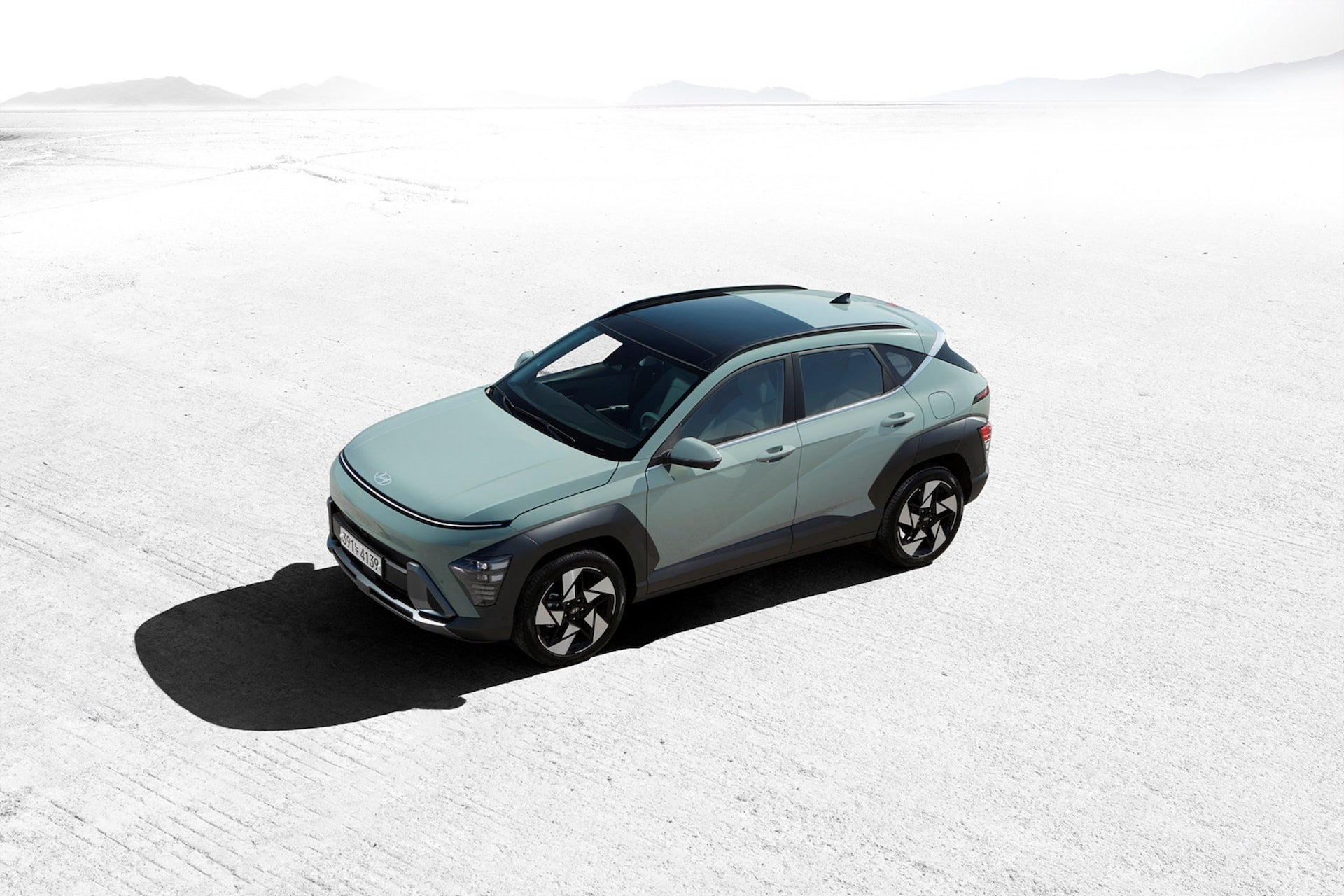
The Hyundai Kona on a white sandy road looking at it from above

2023 Hyundai Kona SE: Starting MSRP $22,140

The Hyundai Kona's base trim level offers a range of great options. It establishes a high-quality baseline, which is hard to beat when it comes to small SUVs. 

The 147-horsepower four-cylinder engine uses a six-speed intelligent variable transmission, which is a type of automatic technology that Hyundai developed to improve performance and gas mileage. For an SUV, the 16-inch alloy wheels are a little on the small side, but they're fine for everyday driving. Projector halogen headlights and bulb-type taillights are standard on all the trim levels except the Limited. 

In the interior of the vehicle, you'll find cloth seats and a six-way adjustable driver seat to keep you comfortable while driving. An 8-inch touch-screen infotainment system combines with wireless Apple CarPlay and Android Auto to keep you connected while on the road, and a 4.2-inch gauge cluster is there to show you important driving information.

2023 Hyundai Kona SEL: Starting MSRP $23,950

The SEL builds on the foundation of the SE, and it has the same engine and transmission. The first noticeable difference is the SEL's larger 17-inch wheel size.

A few of the added amenities to the SEL trim level include standard roof rails and proximity key entry with push button start for added convenience. This means you can leave your key in your purse or pocket when you get to your car, and your vehicle will unlock automatically when it detects your key nearby.

On the inside of the Kona SEL, an eight-way power adjustable driver's seat makes it easier to get in the right position for long drives around California. HD Radio and SiriusXM are standard to give you more listening options while on the road. The SEL also includes access to Bluelink, a program that connects to an app on your phone. It allows you to control certain features, such as remote start, climate control, and on-demand diagnostics and alerts.

The SEL comes with the option to add a Convenience Package, which includes upgrades that add a luxury feel to this trim level. These extra features include a Hyundai digital key, a 10.25-inch touch-screen navigation, wireless device charging, a power sunroof, heated front seats, a leather-wrapped steering wheel and shift knob, automatic temperature control, and a hidden cargo-area storage compartment.

2023 Hyundai Kona N Line: Starting MSRP $27,850

The N Line moves further away from the base trim level, with a zippier 195-horsepower turbocharged four-cylinder engine paired with a seven-speed dual-clutch automatic transmission that definitely makes this trim level feel like a sportier option. The wheels are upgraded to a wider 18 inches, and they have a unique N Line design.

The N Line not only has a sportier engine, but it has a sportier exterior aesthetic as well, featuring gloss-black exterior mirrors, body-colored cladding, N Line front and rear fascia, trim-specific badging, and twin-tip exhaust pipes.

The features that are optional with the SEL Convenience Package are standard in the N Line. An upgraded 10.25-inch gauge cluster completes the list of extras that differentiates the N Line from the SE and SEL trim levels. Wireless phone charging is also a standard feature with the N Line.

2023 Hyundai Kona Limited: Starting MSRP $28,950

This top-of-the-line trim level includes the N Line's sportier engine but replaces its distinctive exterior styling features with a more luxurious look.

The Limited includes an electronic parking brake with auto hold. Lighting receives an upgrade with LED headlights and taillights and high-beam assist, while the interior lighting gets a boost with LED ambient cabin lights. The seating is also trimmed with leather for a more upscale look.

You'll get a few additional driver-assistance features in the Limited, including cyclist detection, reverse parking distance warning, and highway driving assist.

If you're looking to buy a 2023 Hyundai Kona, you can't go wrong no matter which trim level you choose. There are many different styles of drivers here in the Dublin, California, area, and there are different styles of Konas to meet their individual needs. 

The SE provides a great set of standard features at a price that rivals many sedans, and the SEL includes the option to upgrade to more advanced features while keeping the standard engine. The N Line has a more powerful engine and sportier design, while the Limited keeps the added power but swaps the sporty look for a more sophisticated finish. Please feel free to contact us at Dublin Hyundai if you have any questions about the 2023 Hyundai Kona.

Image by Hyundai Motor Group is licensed with Unsplash license
Posted in:

Related Posts

The hood of a red Kona while the sun is setting between the trees

Explore the New Features on the 2024 Hyundai KONA

The 2024 Hyundai KONA, a subcompact soft-roader, strikes the perfect balance between urban sophistication and practicality. Its unique design sets it apart from its peers, making it an attractive option for those looking for a stylish and functional vehicle. Crafted with finesse and loaded with contemporary conveniences, the KONA underscores Hyundai's dedication to producing vehicles that are as practical as they are aesthetically pleasing. more Whether you're navigating through Dublin's city streets or cruising down the highway, the 2024 Hyundai KONA promises an unparalleled driving experience. This article gives you the inside scoop on what makes this new model a must-have for your daily drive. Performance and Fuel Economy The 2024 Hyundai KONA houses the same two powertrains as last year's model, underlining its commendable performance and fuel efficiency. The base model has a 2.0-liter naturally aspirated four-cylinder engine, while the N Line and Limited trims come standard with a 1.6-liter turbo four-cylinder engine. The non-turbo engine, paired with a continuous variable transmission, churns out 147 horsepower and 132 pound-feet of torque. The turbo powertrain connects to an eight-speed automatic transmission, producing a powerful output of 190 horsepower and 195 pound-feet of torque. This translates to impressive acceleration, enabling the KONA to sprint from zero to 60 mph in just 8.5 seconds. Fuel economy is where the 2024 Hyundai KONA truly shines. The EPA has rated it highly for its efficient performance, with fuel economy ratings as high as 29 mpg in the city and 34 mpg on the highway for the standard front-wheel-drive models. Those opting for more traction with the all-wheel drive can still look forward to efficient figures, achieving 24 mpg in urban environments and 29 mpg when cruising on the highway. These figures go hand in hand with KONA's commitment to a performance that balances power, responsiveness, and efficiency. Specs and Design The exterior design of the 2024 Hyundai KONA is a head-turner, featuring bold lines and curves that exude confidence and style. Its signature front grille with a glossy black finish stands out against the vibrant color options available for this model. The sleek LED headlights and taillights add to its modern appeal, while the alloy wheels give it a sporty edge. The 2024 KONA is larger than its predecessors, measuring 5.7 inches longer and an inch wider. This increase in size, coupled with redesigned front seats, has resulted in increased cargo capacity and more space for rear passengers. The interior boasts a sleek and futuristic design, complemented by ambient lighting that creates a luxurious atmosphere. Other notable features include a column-mounted shifter and leather upholstery, enhancing the KONA's premium feel. Technology Used A significant highlight of the 2024 Hyundai KONA is its advanced technological features. Dominating the dashboard are dual 12.3-inch displays, housed behind a single continuous piece of glass. The first of the two is a reconfigurable gauge display, providing drivers with essential information at a glance. The second, a large touch screen, serves as the infotainment system control panel. Both Apple CarPlay and Android Auto compatibility come standard, allowing seamless smartphone integration. The KONA also introduces a host of state-of-the-art tech features designed to enhance convenience and connectivity. The all-new phone-as-key functionality allows drivers to unlock and start the vehicle using their smartphones, eliminating the need for conventional keys. This model also supports over-the-air updates, keeping the infotainment system always up to date with the latest features and improvements. A head-up display, projecting key driving information directly into the driver's line of sight, is another standout feature. Audiophiles will appreciate the eight-speaker Bose premium audio system that delivers a superior and immersive sound experience. Standard USB-C ports and a wireless charging pad make it easy to keep your devices powered and connected on the go. Comfort and Cargo Capacity In terms of comfort, Hyundai has taken a thoughtful approach to designing the 2024 KONA's interior. The most notable change includes the adoption of a slimmer front seat-back design that adds extra legroom for rear-seat passengers. This minor yet noteworthy change ensures a more comfortable ride for all passengers, even on long journeys. Coupled with premium seating and ample headroom, this spaciousness transforms the new KONA into a haven of comfort and relaxation. A set-and-forget dual-zone automatic climate control system further enhances the cabin's comfort, allowing you to customize your temperature preferences. With the transformation in the vehicle's dimensions, the cargo area has substantially expanded. The new model offers 25.5 cubic feet of cargo space behind the rear seats, providing ample room for your luggage, groceries, or outdoor gear. For those requiring additional storage, you can fold down the back row to reveal a generous 63.7 cubic feet of space. This makes the KONA a perfect companion for both city errands and weekend getaways. Safety Features The second-generation KONA prioritizes safety, offering an extensive range of driver-assist features. Basics such as automatic emergency braking and lane-keep assist are likely to be standard. Meanwhile, Hyundai's impressive highway drive assist — which includes adaptive cruise control and lane centering — will likely require option packages or higher trim levels. Other safety features, such as blind-spot monitoring, rear cross-traffic alert, rear occupant alert, automatic high beams, and driver attention warning, will come standard or be available either as optional extras, depending on the chosen trim. These safety enhancements work collectively to create a secure and confident driving environment, underlining the 2024 Hyundai KONA's commitment to road safety. Test Drive the 2024 Hyundai KONA at Dublin Hyundai The 2024 Hyundai KONA is a versatile and reliable vehicle that promises to elevate your driving experience. Its impressive performance, modern design, advanced technology, and focus on safety make it a top choice in the subcompact SUV market. Visit Dublin Hyundai to take this exciting new model for a test drive when it hits dealer lots. In the meantime, browse our extensive inventory of new and used vehicles. If financing is a concern, our team of finance experts will help you find the best financing deals. Contact us to learn more about the 2024 Hyundai KONA or schedule a service.

Red Hyundai Konda roof rack close up.

How To Install a Roof Rack on Your Hyundai Kona

Is your Hyundai Kona the perfect weekend warrior and travel companion? Your SUV meets your lifestyle needs, but it might be missing an extra accessory to truly optimize your Dublin, California, adventures. Hyundai Kona roof cargo carriers and roof racks are the next best thing to maximize its utility and capacities. Take an effective step toward enhancing your Hyundai Kona with a roof rack and learn how to install one with this overview. Why Add a Roof Rack to Your Hyundai Kona? You may think your Hyundai Kona is adventure-ready, with its off-roading capabilities and great fuel economy, but your available storage space is just as important. Adding a roof rack to your Kona can help with the following: Enhancing Your Vehicle's Utility For a subcompact crossover SUV, the 2024 Hyundai Kona offers a modest interior cargo volume of 63.7 cubic feet with the rear seats folded down. However, you compromise your five-passenger seating capacity. One of the best Hyundai Kona cargo solutions is adding a roof rack to the existing roof side rails. A roof rack increases your vehicle's utility, providing additional cargo space for various items without affecting your passenger or interior cargo configuration. Preparing for Adventure: The Benefits Adding a roof rack enhances your Hyundai Kona's outdoor adventure setup. This SUV accessory allows you to carry bikes and kayaks on top of your Kona so you can hit the trails in Redwood National Park or explore the refreshing waters of the bay. A Kona roof rack offers plenty of space for your camping gear so you can plan a fun Bay Area getaway with family or friends. Choosing the Right Roof Rack for Your Kona Uphold the reliability of your SUV by choosing the best roof racks for a Hyundai Kona, depending on your travel needs. Types of Roof Racks Explained Different roof racks are available for your Hyundai Kona, each with specific uses. Get a better understanding of what they are and how they work with this list: Roof rails: Roof rails are factory installed to your Kona that run parallel to the length of your car in a north and south direction. This accessory is the foundation for roof racks and cargo carrier installation. Roof racks: A Hyundai Kona roof rack is a series of horizontal bars that attach to your roof rails. They are made from durable, lightweight materials such as aluminum or steel, designed to withstand heavy loads and resist damage from the elements. Crossbars: Crossbars are similar to roof racks but engineered to be more aerodynamic. They provide extra cargo support and stability wherever you travel. Depending on the type, you may be able to lock your crossbars for additional security. Compatibility and Selection Tips Before purchasing a roof rack for your Hyundai Kona, ensure it is compatible with your SUV. Consider important factors like weight limits when choosing a roof rack. Will you use it to carry light luggage or heavy dirt bikes? Additionally, your vehicle specifications, like length and if it has a moon or sunroof, can affect whether you can install a Hyundai Kona roof rack. Step-By-Step Installation Guide Installing a new roof rack on your Hyundai Kona is an easy do-it-yourself project. Here's your Hyundai Kona roof rack installation guide: Tools and Materials Needed You will need the following tools and materials to complete a DIY roof rack installation on your Hyundai Kona: A bucket of clean water and a cloth. A step ladder. Safety gloves and goggles. A torque wrench. A 5-millimeter hex socket wrench. A front and rear crossbar installation kit complete with a hardware bag, quick reference guide, and 5-millimeter hex key. Detailed Installation Steps Follow this step-by-step guide on how to install a roof rack on your Kona: Using the provided keys, unlock all four crossbar covers by turning the key clockwise. Take the key out of the keyhole and remove the roof crossbar covers. Note: Be mindful of where you place your keys and roof crossbar covers so you don't lose them. Using the 5-millimeter hex key, loosen the bolts and clamps of the roof crossbars on all four sides. Do not remove the bolts. Clean your Kona roof rails before installing the crossbars with a bucket of clean water and a cloth. Use a step ladder to access the harder-to-reach spots. Check the mounting direction and location of the front and rear crossbars before mounting them to your Hyundai Kona. Note: The front crossbar is wider than the rear. Place the roof crossbars on your Kona's side rails and loosen the crossbar clamps to match the rails' shape. Position the front crossbar behind the first hole cap on the roof rails. Position the rear cross bars in front of the third hole cap on the roof rails. Note: Remember to keep the front and rear roof crossbars parallel to each other. Use the torque wrench and 5-millimeter hex socket to tighten the bolts of the roof crossbars. Repeat until all bolts are tightened. Hold each crossbar by hand and test to ensure each clamp is fully locked onto the roof rails. The crossbars should be tight and secure. If they move when you shake them, return to step 6 and check again. Replace the roof crossbar covers, ensuring the left-hand and right-hand covers are installed accordingly. Insert the key into the keyhole of the roof crossbar cover and turn it counterclockwise to lock it. Store the keys, 5-millimeter hex key, and quick reference guide in your Kona's glove compartment for safekeeping. Safety Tips for Installing and Using a Roof Rack The following Hyundai Kona roof rack safety tips are the last step of the DIY installation process to ensure safe driving: Before traveling, verify the clamps are fully seated on the side roof rails. Ensure the crossbars are in the locked position and do not jiggle or rattle. There should be no movement. Ensure proper load distribution and spread your cargo evenly across your roof rack. Double-check that your cargo is secured effectively with appropriate tie-downs and straps to prevent accidents. Maximizing Space: Roof Racks for Kona in Dublin, California Curious about adding storage to your Hyundai Kona? Discover quality roof rack options and Hyundai Kona roof rack accessories at Dublin Hyundai. Our team is committed to helping you enhance your Hyundai SUV with exceptional parts. Contact us today to browse our parts inventory or schedule a roof rack installation appointment. Bike Racks by Henry Burrows is licensed with CC BY-SA 2.0

Hyundai Ioniq 5 parked in the rain.

2025 Hyundai Kona Electric vs 2025 Hyundai Ioniq 5 N

As electric vehicles (EVs) continue to gain traction, Hyundai stands out with its versatile lineup that caters to a range of drivers. Among Hyundai's 2025 models, the KONA Electric and the IONIQ 5 N are two standout models that are top choices for potential EV buyers. The KONA Electric is a compact, affordable, and efficient SUV, while the IONIQ 5 N is a midsize crossover SUV with great performance. In this article, we explore the key differences between these two models and examine aspects such as performance, range, interior comfort, so you can decide which fits your lifestyle best. more What's New in 2025 for Hyundai KONA Electric and IONIQ 5 N? In 2025, Hyundai refreshed both the KONA Electric and the IONIQ 5 N to remain competitive in the evolving EV market. Here's a quick overview. KONA Electric 2025 Updates The 2025 Hyundai KONA Electric's latest model features a redesigned exterior and interior, sporting a sleeker and more aerodynamic profile with revised front and rear fascias, as well as new lighting elements. Hyundai's upgraded infotainment system also features a larger touch screen, additional connectivity, and driver assistance features for added convenience. The 2025 KONA Electric also offers improved battery management for enhanced range and efficiency. IONIQ 5 N 2025 Updates The 2025 IONIQ 5 N represents Hyundai's first high-performance EV. Hyundai's N division, known for its sports-oriented tuning, has enhanced the IONIQ 5 N with a powerful electric motor, responsive handling, and sporty design cues such as bold N-exclusive trims and larger wheels. The model also debuts Hyundai's new software updates for real-time performance tracking and customizable drive modes, letting you personalize the car's power, suspension, and throttle response. Detailed Pricing Analysis and Purchase Recommendations Here's a quick overview of both models' prices: KONA Electric 2025 For budget-conscious buyers, the KONA Electric is an excellent choice, balancing cost and features across its various trims: SE: $34,270 SEL: $38270 N Line: $39,670 Limited: $42,445 IONIQ 5 N 2025 With its new performance upgrades, the 2025 IONIQ 5 N is perfect for car enthusiasts who can appreciate the value that comes at a higher price point. Base: $67,495 EV Motor Specifications, Power, and Performance Comparison Both the 2025 Hyundai KONA Electric's and Hyundai IONIQ 5's performances cater to very different drivers. The KONA Electric's front-wheel drive system pairs with a single electric motor that delivers 201 horsepower and 291 lb-ft of torque to ensure smooth and efficient power delivery. The KONA Electric delivers solid acceleration without excessive power, reaching 0-60 mph in 6.4 seconds. In contrast, the 2025 Hyundai IONIQ 5 N's specs are perfect for thrill seekers, featuring a dual-motor setup and all-wheel drive to churn out more than 600 horsepower and an output of 545 lb-ft. This extra power also gives the IONIQ 5 N an edge in acceleration, reaching 0-60 mph in under four seconds. The 5 N also comes with a sport-tuned suspension and high-performance brakes to ensure agile handling and fast power delivery. Range, Charging Capabilities, and Battery Life Comparison The KONA Electric focuses on range and efficiency, while the IONIQ 5 N prioritizes rapid charging with a lower range. The KONA Electric has an estimated electric range of 274-300 miles on a single charge, covering daily commutes and some road trips. The battery size is around 64-70 kWh, and with its fast-charging capabilities, it can charge up to 80% in about 45 minutes at a DC fast-charging station. The IONIQ 5 N has a slightly shorter estimated range due to its performance tuning, clocking in at 250-275 miles per charge on an 82 kWh battery. However, it compensates with ultra-fast 800-volt charging technology, charging from 10% to 80% is about 18 minutes at a 350 kW DC fast-charging station. Living With an EV: Interior Comfort, Cargo Space, and Daily Usability The KONA Electric has a spacious interior with a comfortable cabin that fits up to five occupants. While it's a compact SUV, its efficient layout provides adequate legroom for passengers and a generous cargo space. Its updated user-friendly infotainment system also features a larger touch screen and Apple CarPlay and Android Auto compatibility. The IONIQ 5 N's cabin is more spacious and high-tech, with a longer wheelbase and luxurious materials. It also comes with a customizable digital cockpit and a large multimedia display. The IONIQ 5 N also has more cargo space than the KONA, making it a great choice for longer trips or for drivers who frequently haul larger loads. Safety First: Reviewing Driver-Assistance Features and Safety Ratings Both models come with sophisticated driver-assistance features, including: Forward collision warning Lane-keep assist Blind-spot monitoring Rear cross-traffic alert Smart cruise control with Stop & Go The IONIQ 5 N also introduces performance-oriented safety enhancements, maintaining the high safety standards epitomized by its predecessors. What's Next: Experience the Future of Hyundai EVs Choosing between the 2025 Hyundai KONA Electric and the IONIQ 5 N comes down to personal preference, whether you prefer affordability and practicality versus high performance and advanced technology. Visit us at Dublin Hyundai to learn more about these EVs and explore which models fit your driving needs. Contact us to schedule a test-drive and consult with our team about your financing options to start your electric journey today. Grayscale Photo of a Hyundai Ioniq 5 in the Rain by Hyundai Motor Group licensed with Pexels License Red Hyundai Kona parked on cobblestone street by Hyundai Motor Group licensed w Pexels License